Προσθήκη στα αγαπημένα
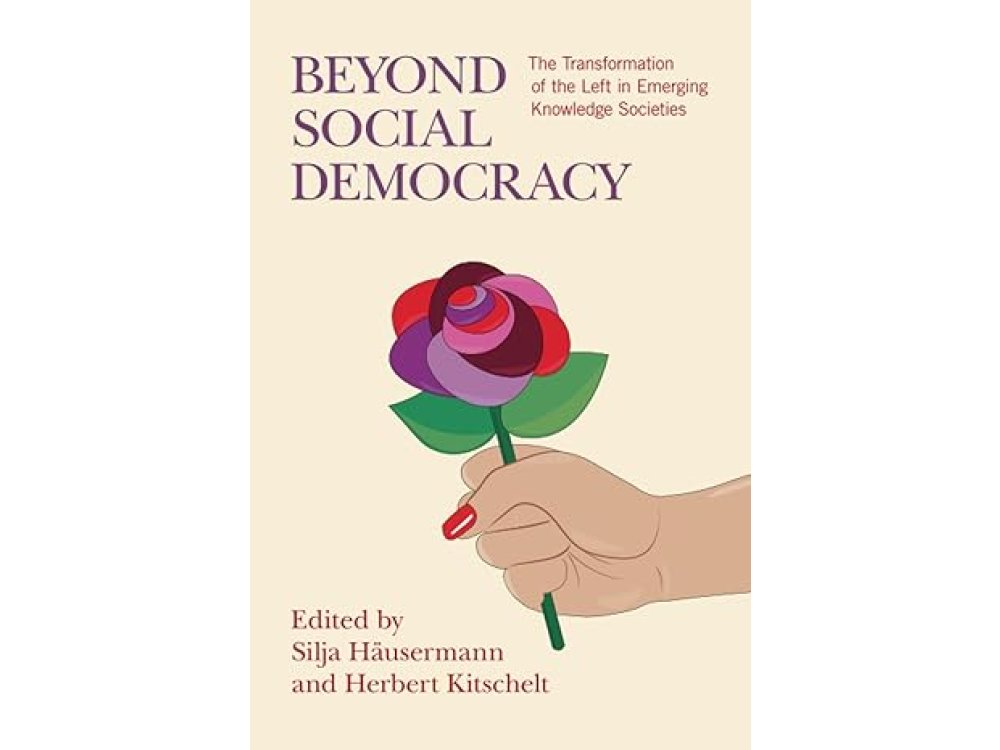
Beyond Social Democracy examines the electoral decline of social democratic parties and how distinctive strategic moves might enable them to salvage different segments of their former electoral coalitions. Social democratic decline, however, does not imply the demise of basic tenets of the parties' programmatic appeals. Under the impact of novel twenty-first-century political-economic challenges, these concerns are also invoked and repackaged with new ideas by novel left parties. Empirically, voter movements show that social democratic parties incur net losses mostly to these other leftist parties, while sustaining a balanced, but voluminous exchange with center-right parties. Contrary to commonly held preconceptions, there is little net loss to the new extreme Right. These findings will be pertinent to anyone interested in understanding or devising party strategies in twenty-first-century democracies. This title is also available as Open Access on Cambridge Core.
1. Introduction and theoretical framework Silja Häusermann and Herbert Kitschelt
Part I. Voter Flows and Electoral Potentials:
2. The changing geography of the social democratic vote Jane Gingrich
3. Losing the middle ground: the electoral decline of social democratic parties since 2000 Tarik Abou-Chadi and Markus Wagner
4. Who continues to vote for the left? Social class of origin, intergenerational mobility and party choice in Western Europe Macarena Ares and Mathilde M. van Ditmars
5. Lost in transition: Where are all the social democrats today? Daniel Bischof and Thomas Kurer
6. Social democracy in competition: voting propensities, electoral potentials and overlaps Silja Häusermann
Part II. Considerations of Choice: Motivations and Preferences:
7. Vote switchers and social democracy in contemporary knowledge capitalism: voter rationales signal strategic dilemmas of social democracy Herbert Kitschelt and Philipp Rehm
8. Labor unionization and social democratic parties Silja Häusermann, Herbert Kitschelt, Nadja Mosimann and Philipp Rehm
9. Old left, new left, centrist or left national? Determinants of support for different social democratic programmatic strategies Tarik Abou-Chadi, Silja Häusermann, Reto Mitteregger, Nadja Mosimann and Markus Wagner
Part III. Determinants of Electoral Outcomes for Social Democratic Parties and the Left:
10. Voter responses to social democratic ideological moderation after the third way Jonathan Polk and Johannes Karreth
11. Social democracy and party competition: Mapping the electoral payoffs of strategic interaction Herbert Kitschelt and Philipp Rehm
12 The electoral consequences of centrist policies: fiscal consolidations and the fate of social democratic parties Björn Bremer
13. Leadership turnovers and their electoral consequences: a social democratic exceptionalism? Zeynep Somer-Topcu and Daniel Weitzel
14. Conclusions Silja Häusermann and Herbert Kitschelt.
Περιγραφή
Beyond Social Democracy examines the electoral decline of social democratic parties and how distinctive strategic moves might enable them to salvage different segments of their former electoral coalitions. Social democratic decline, however, does not imply the demise of basic tenets of the parties' programmatic appeals. Under the impact of novel twenty-first-century political-economic challenges, these concerns are also invoked and repackaged with new ideas by novel left parties. Empirically, voter movements show that social democratic parties incur net losses mostly to these other leftist parties, while sustaining a balanced, but voluminous exchange with center-right parties. Contrary to commonly held preconceptions, there is little net loss to the new extreme Right. These findings will be pertinent to anyone interested in understanding or devising party strategies in twenty-first-century democracies. This title is also available as Open Access on Cambridge Core.