Προσθήκη στα αγαπημένα
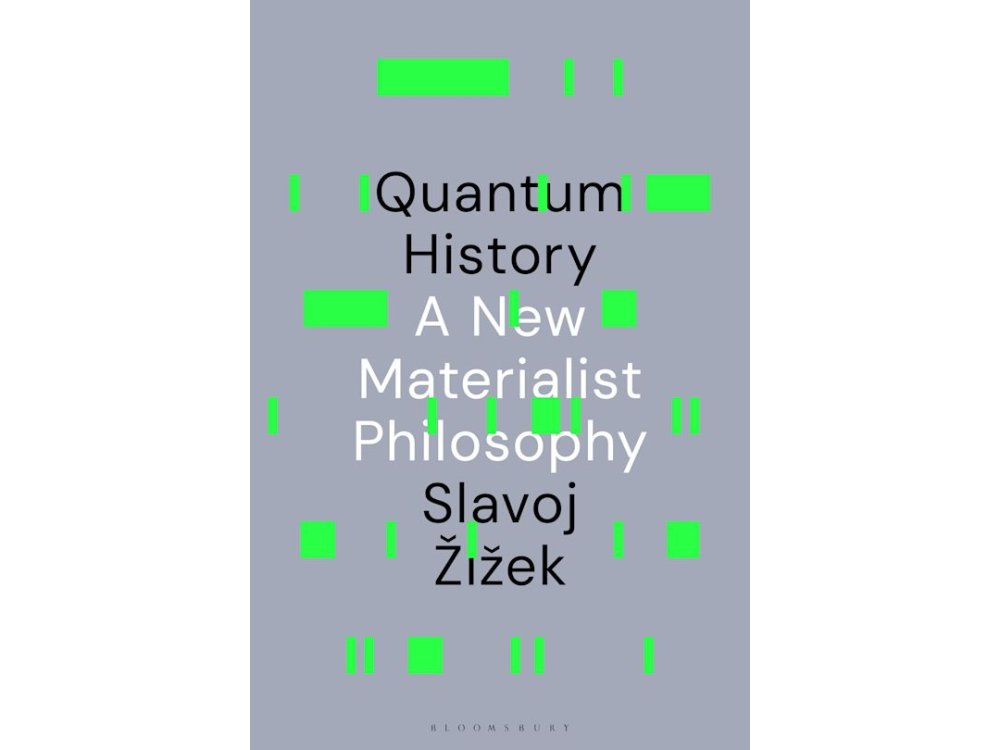
A panoramic view of the cosmos must begin with the tension of a single political moment. In Quantum History, Slavoj Žižek brings together Hegelian dialectics, Lacan psychoanalysis and quantum mechanics to rethink history, reality and political possibility.
Taking up Lenin's challenge to radically reconsider materialism in the wake of each big scientific discovery, and rejecting the recent vogue for giving a vague spiritualist spin to wave mechanics, Žižek embraces the philosophical implications of quantum mechanics with characteristic erudition and verve. Drawing on the central themes of the holographic universe, non-commutativity and the collapse of superpositions, Žižek evolves a quantum-inspired ontology which reinvents the historical materialism of Hegel and Heidegger – and compels a brutal, often darkly funny, inquisition into the chances of radical emancipatory acts today.
Quantum History takes the reader from the absolute contradiction of the primordial void through quantum oscillations to our ordinary reality, weaving in Lacan and Deleuze, Rovelli and Schelling, opera, cinema, sex and war. Žižek is at his sharpest, saddest, most provocative best as he demonstrates that there is no way of extracting ourselves from the texture of history, no neutral position from which the workings of the world can be observed transparently – we must act from a contingent, complex and inscrutable political moment, in sadness and in doubt, but defiantly.
Introduction: Materialism and Quantum Criticism
I - Universal: Collapse Comes First
1 Why A Hegelian Needs Quantum Mechanics
2 Why Quantum Mechanics Needs Hegel3 Noncommutativity in the Symbolic and in the (Quantum) RealII – Particular: From Hegel to Heidegger... and Back1 Names for Finitude: Hegel, Heidegger, Pippin2 The Night of the World3 Heidegger's Politics of FinitudeIII – Singular: Politics in a Quantum World1 The Hologram of Conflicting Universalities2 Can Artificial Intelligence Really Think?3 The Politics of VocationVariationsVariation 1 - Frozen Beauty: Rovelli, Deleuze and the StoicsVariation 2 - No Substitute for True UniversalsVariation 3 – Pure Voice, Pure Sound: Beethoven, Globokar, ActVariation 4 – Acts of ReconciliationVariation 5 – Moderately Conservative CommunismVariation 6 – The Painted VoidVariation 7 – The Many Monsters of CinemaVariation 8 - Sexual SuperpositionsVariation 9 - Make The Kitchen Maid KingConclusion: The Hunger to Be Something
Περιγραφή
A panoramic view of the cosmos must begin with the tension of a single political moment. In Quantum History, Slavoj Žižek brings together Hegelian dialectics, Lacan psychoanalysis and quantum mechanics to rethink history, reality and political possibility.
Taking up Lenin's challenge to radically reconsider materialism in the wake of each big scientific discovery, and rejecting the recent vogue for giving a vague spiritualist spin to wave mechanics, Žižek embraces the philosophical implications of quantum mechanics with characteristic erudition and verve. Drawing on the central themes of the holographic universe, non-commutativity and the collapse of superpositions, Žižek evolves a quantum-inspired ontology which reinvents the historical materialism of Hegel and Heidegger – and compels a brutal, often darkly funny, inquisition into the chances of radical emancipatory acts today.
Quantum History takes the reader from the absolute contradiction of the primordial void through quantum oscillations to our ordinary reality, weaving in Lacan and Deleuze, Rovelli and Schelling, opera, cinema, sex and war. Žižek is at his sharpest, saddest, most provocative best as he demonstrates that there is no way of extracting ourselves from the texture of history, no neutral position from which the workings of the world can be observed transparently – we must act from a contingent, complex and inscrutable political moment, in sadness and in doubt, but defiantly.