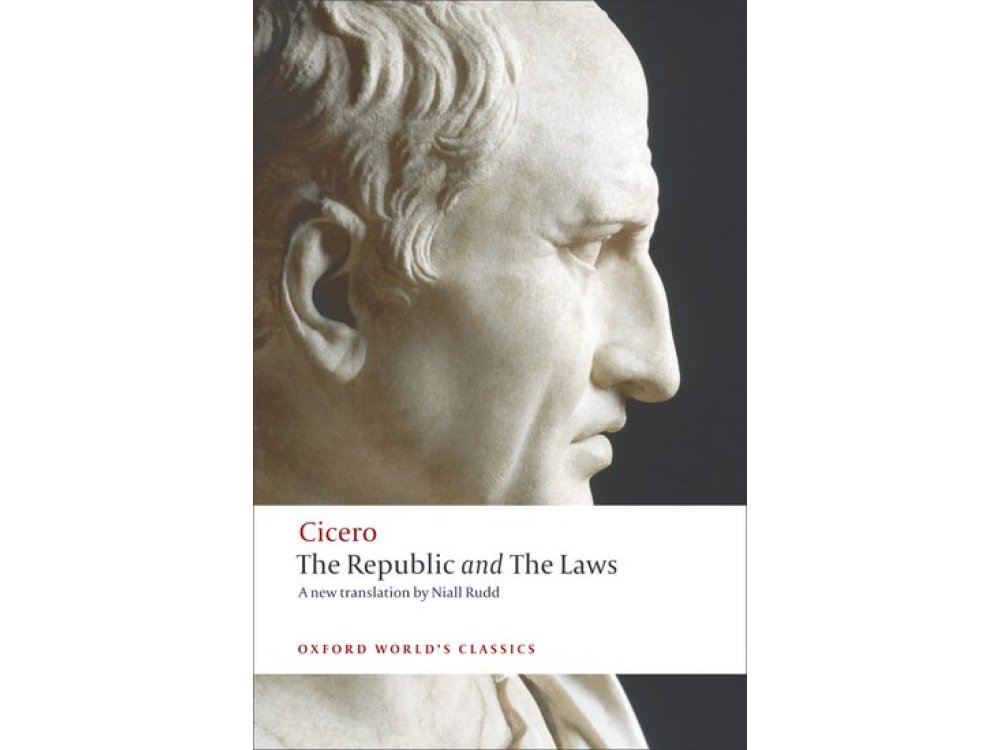
Αρχική / Κοινωνικές Επιστήμες / Πολιτική / The Republic and the Laws

The Republic and the Laws

ΣΥΓΓΡΑΦΕΑΣ
Τιμή
7,00 €
Διαθέσιμο κατόπιν παραγγελίας
Αποστέλλεται σε 15 - 25 ημέρες.

Προσθήκη στα αγαπημένα

`However one defines Man, the same definition applies to us all. This is sufficient proof that there is no essential difference within mankind.' (Laws l.29-30)

Cicero's The Republic is an impassioned plea for responsible governement written just before the civil war that ended the Roman Republic in a dialogue following Plato. Drawing on Greek political theory, the work embodies the mature reflections of a Roman ex-consul on the nature of political organization, on justice in society, and on the qualities needed in a statesman. Its sequel, The Laws, expounds the influential doctrine of Natural Law, which applies to all mankind, and sets out an ideal code for a reformed Roman Republic, already half in the realm of utopia.

This is the first complete English translation of both works for over sixty years and features a lucid Introduction, a Table of Dates, notes on the Roman constitution, and an Index of Names.


Συγγραφέας: Cicero
Εκδότης: OXFORD UNIVERSITY PRESS
Σελίδες: 242
ISBN: 9780199540112
Εξώφυλλο: Μαλακό Εξώφυλλο
Αριθμός Έκδοσης: 1
Έτος έκδοσης: 2008

Marcus Tullius Cicero (3 January 106 BC – 7 December 43 BC) was a Roman statesman, lawyer, scholar, philosopher, orator, writer and Academic skeptic, who tried to uphold optimate principles during the political crises that led to the establishment of the Roman Empire. His extensive writings include treatises on rhetoric, philosophy and politics. He is considered one of Rome's greatest orators and prose stylists and the innovator of what became known as "Ciceronian rhetoric". Cicero was educated in Rome and in Greece. He came from a wealthy municipal family of the Roman equestrian order, and served as consul in 63 BC. He greatly influenced both ancient and modern reception of the Latin language. A substantial part of his work has survived, and he was admired by both ancient and modern authors alike. Cicero adapted the arguments of the chief schools of Hellenistic philosophy in Latin and coined a large portion of Latin philosophical vocabulary via lexical innovation (e.g. neologisms suchas evidentia, generatorhumanitasinfinitioqualitasquantitas), almost 150 of which were the result of translating Greek philosophical terms.

Σας προτείνουμε

Newsletter

Εγγραφείτε στο newsletter για να λαμβάνετε πρώτοι τις νέες κυκλοφορίες και τις προσφορές μας
Ο λογαριασμός σας Τα αγαπημένας σας