Add to wishlist
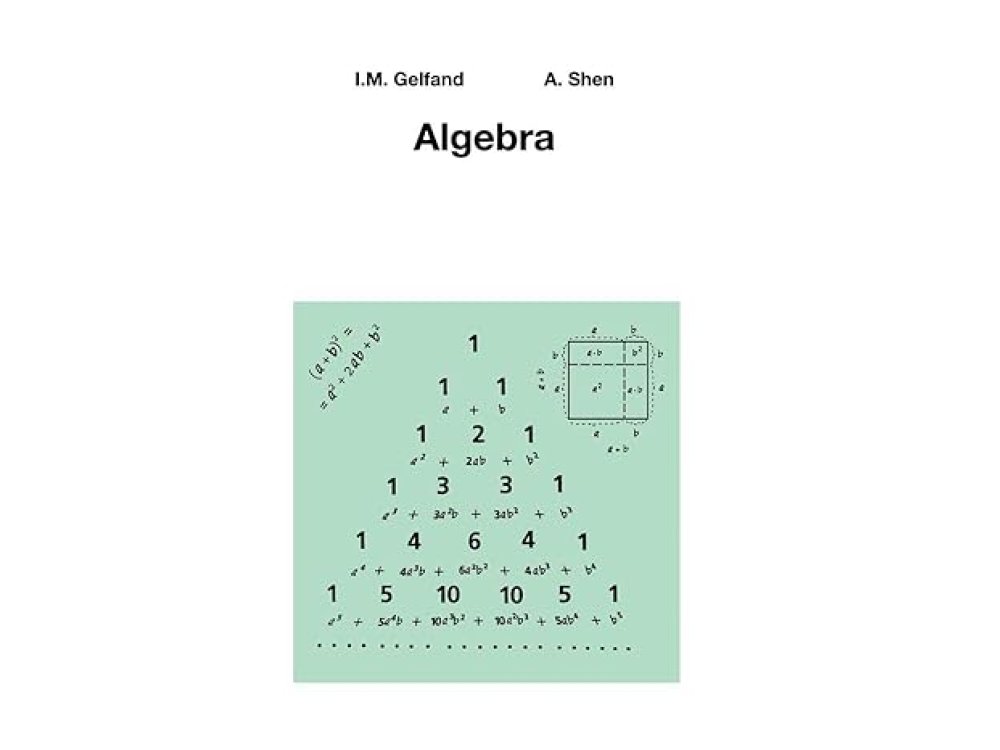
This book is about algebra. This is a very old science and its gems have lost their charm for us through everyday use. We have tried in this book to refresh them for you. The main part of the book is made up of problems. The best way to deal with them is: Solve the problem by yourself - compare your solution with the solution in the book (if it exists) - go to the next problem. However, if you have difficulties solving a problem (and some of them are quite difficult), you may read the hint or start to read the solution. If there is no solution in the book for some problem, you may skip it (it is not heavily used in the sequel) and return to it later. The book is divided into sections devoted to different topics. Some of them are very short, others are rather long. Of course, you know arithmetic pretty well. However, we shall go through it once more, starting with easy things. 2 Exchange of terms in addition Let's add 3 and 5: 3+5=8. And now change the order: 5+3=8. We get the same result. Adding three apples to five apples is the same as adding five apples to three - apples do not disappear and we get eight of them in both cases. 3 Exchange of terms in multiplication Multiplication has a similar property. But let us first agree on notation.
Description
This book is about algebra. This is a very old science and its gems have lost their charm for us through everyday use. We have tried in this book to refresh them for you. The main part of the book is made up of problems. The best way to deal with them is: Solve the problem by yourself - compare your solution with the solution in the book (if it exists) - go to the next problem. However, if you have difficulties solving a problem (and some of them are quite difficult), you may read the hint or start to read the solution. If there is no solution in the book for some problem, you may skip it (it is not heavily used in the sequel) and return to it later. The book is divided into sections devoted to different topics. Some of them are very short, others are rather long. Of course, you know arithmetic pretty well. However, we shall go through it once more, starting with easy things. 2 Exchange of terms in addition Let's add 3 and 5: 3+5=8. And now change the order: 5+3=8. We get the same result. Adding three apples to five apples is the same as adding five apples to three - apples do not disappear and we get eight of them in both cases. 3 Exchange of terms in multiplication Multiplication has a similar property. But let us first agree on notation.

.jpg)