Add to wishlist
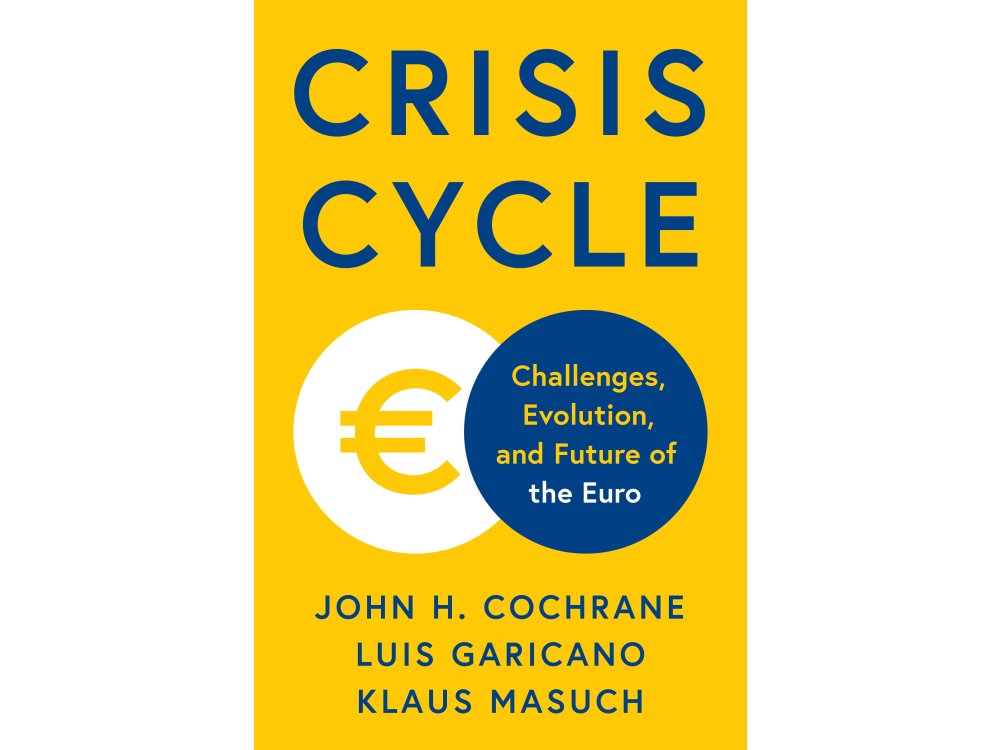
The euro has survived crises unimagined at its founding: the financial meltdown of 2007–2009, the sovereign debt crisis of 2010–2012, the pandemic, and the Russian invasion of Ukraine. The European Central Bank fought these crises with dramatic policy innovations, buying up vast amounts of debt and providing large loans to banks. But now everyone expects the ECB to intervene routinely, and the euro is more fragile as a result. Crisis Cycle recounts this history and offers recommendations for restoring a durable monetary union.
Monetary and fiscal policy are intertwined, especially in a currency union like the eurozone. Member states can be tempted to borrow and spend too much, and then count on the ECB to rescue them by printing money to buy their bonds. To avoid these disincentives, the ECB was founded with a narrow mandate: use interest rates to pursue price stability, and don’t buy sovereign debt. Debt and deficit rules would keep countries from getting into trouble.
The ECB’s emergency innovations brought back these disincentives. How can the EU avoid larger and larger bailouts? The authors argue that Europe needs a joint fiscal institution that can provide temporary help to sovereigns, a resolution mechanism so sovereign default is a motivating possibility, and bank reform that ensures sovereign default will not bring down the financial system. This timely book shows how to restore the euro’s ambitious and effective founding framework. The unique group of authors combine extensive policy experience and authoritative academic credentials.
Description
The euro has survived crises unimagined at its founding: the financial meltdown of 2007–2009, the sovereign debt crisis of 2010–2012, the pandemic, and the Russian invasion of Ukraine. The European Central Bank fought these crises with dramatic policy innovations, buying up vast amounts of debt and providing large loans to banks. But now everyone expects the ECB to intervene routinely, and the euro is more fragile as a result. Crisis Cycle recounts this history and offers recommendations for restoring a durable monetary union.
Monetary and fiscal policy are intertwined, especially in a currency union like the eurozone. Member states can be tempted to borrow and spend too much, and then count on the ECB to rescue them by printing money to buy their bonds. To avoid these disincentives, the ECB was founded with a narrow mandate: use interest rates to pursue price stability, and don’t buy sovereign debt. Debt and deficit rules would keep countries from getting into trouble.
The ECB’s emergency innovations brought back these disincentives. How can the EU avoid larger and larger bailouts? The authors argue that Europe needs a joint fiscal institution that can provide temporary help to sovereigns, a resolution mechanism so sovereign default is a motivating possibility, and bank reform that ensures sovereign default will not bring down the financial system. This timely book shows how to restore the euro’s ambitious and effective founding framework. The unique group of authors combine extensive policy experience and authoritative academic credentials.