Add to wishlist
Natural selection depends on death; little would evolve without it. Every animal on Earth is shaped by its presence and fashioned by its spectre. We are all survivors of starvation, drought, volcanic eruptions, meteorites, plagues, parasites, predators, freak weather events, tussles and scraps, and our bodies are shaped by these ancient events.
Some animals live for just a few hours as adults, others prefer to kill themselves rather than live unnecessarily for longer than they are needed, and there are a number of animals that can live for centuries. There are parasites that drive their hosts to die awful deaths, and parasites that manipulate their hosts to live longer, healthier lives. There is death in life.
Amongst all of this, there is us, the upright ape; perhaps the first animal in the history of the universe fully conscious that death really is going to happen to us in the end.
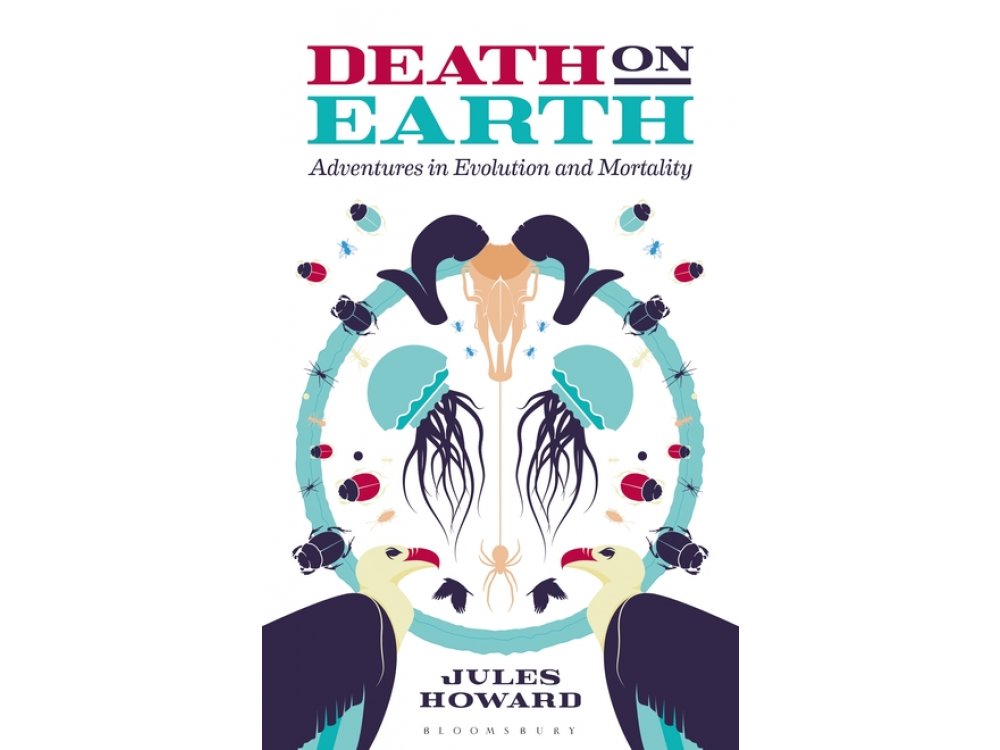
With a narrative featuring a fish with a fake eye, the oldest animal in the world, the immortal jellyfish and some of the world's top death-investigating biologists, Death on Earth explores the never-ending cycle of death and the impact death has on the living, and muses on how evolution and death affect us every single day. Why are we so weird about death? Where does this fear come from? Why are we so afraid of ageing? And how might knowledge of ageing in other animals help us live better lives, free of the diseases of old age?
Description
Natural selection depends on death; little would evolve without it. Every animal on Earth is shaped by its presence and fashioned by its spectre. We are all survivors of starvation, drought, volcanic eruptions, meteorites, plagues, parasites, predators, freak weather events, tussles and scraps, and our bodies are shaped by these ancient events.
Some animals live for just a few hours as adults, others prefer to kill themselves rather than live unnecessarily for longer than they are needed, and there are a number of animals that can live for centuries. There are parasites that drive their hosts to die awful deaths, and parasites that manipulate their hosts to live longer, healthier lives. There is death in life.
Amongst all of this, there is us, the upright ape; perhaps the first animal in the history of the universe fully conscious that death really is going to happen to us in the end.
With a narrative featuring a fish with a fake eye, the oldest animal in the world, the immortal jellyfish and some of the world's top death-investigating biologists, Death on Earth explores the never-ending cycle of death and the impact death has on the living, and muses on how evolution and death affect us every single day. Why are we so weird about death? Where does this fear come from? Why are we so afraid of ageing? And how might knowledge of ageing in other animals help us live better lives, free of the diseases of old age?