Add to wishlist
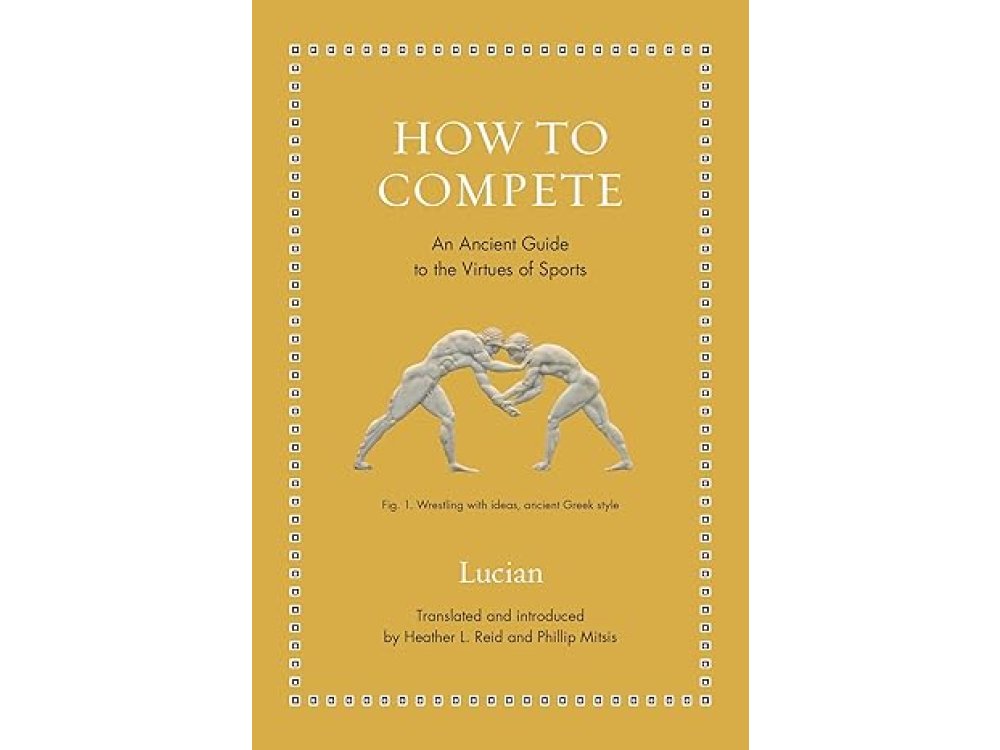
Sports and philosophy went hand in hand for the ancient Greeks and Romans, and philosophical conversation was a recognized part of gym life throughout Greco-Roman antiquity. Athens’s Lyceum was a gym—and reportedly a hangout of that philosophical gym rat Socrates—before it became the site of Aristotle’s school. Fittingly, that gym is the setting of the Greek satirist Lucian’s Anacharsis, a witty philosophical dialogue that wrestles with questions about the purpose and value of sports—questions that we are still grappling with in our own sports- and fitness-obsessed times. How to Compete presents a new translation of Lucian’s timeless classic, inviting us into a ringside debate about the point of sports.
Pitting a sports skeptic, Anacharsis, against a superfan, Solon, this delightful and thought-provoking work tries to make sense of sports. Why do so many of us care so much about them? Are sports like boxing too violent? Should we take fitness so seriously? Do athletics have educational value? And, most important of all, why did the ancient Greeks exercise naked? While Anacharsis, observing a Greek sport that sounds something like mixed martial arts, asks what kind of citizens set aside serious affairs to watch young men beat each other to a pulp, Solon counters that sports have great civic benefits and that athletes are ultimately competing for the highest prize—human excellence.
Featuring an inviting introduction, a handy glossary, helpful notes, and the original Greek on facing pages, How to Compete is a winning exploration of why sports are more than just a game.
Description
Sports and philosophy went hand in hand for the ancient Greeks and Romans, and philosophical conversation was a recognized part of gym life throughout Greco-Roman antiquity. Athens’s Lyceum was a gym—and reportedly a hangout of that philosophical gym rat Socrates—before it became the site of Aristotle’s school. Fittingly, that gym is the setting of the Greek satirist Lucian’s Anacharsis, a witty philosophical dialogue that wrestles with questions about the purpose and value of sports—questions that we are still grappling with in our own sports- and fitness-obsessed times. How to Compete presents a new translation of Lucian’s timeless classic, inviting us into a ringside debate about the point of sports.
Pitting a sports skeptic, Anacharsis, against a superfan, Solon, this delightful and thought-provoking work tries to make sense of sports. Why do so many of us care so much about them? Are sports like boxing too violent? Should we take fitness so seriously? Do athletics have educational value? And, most important of all, why did the ancient Greeks exercise naked? While Anacharsis, observing a Greek sport that sounds something like mixed martial arts, asks what kind of citizens set aside serious affairs to watch young men beat each other to a pulp, Solon counters that sports have great civic benefits and that athletes are ultimately competing for the highest prize—human excellence.
Featuring an inviting introduction, a handy glossary, helpful notes, and the original Greek on facing pages, How to Compete is a winning exploration of why sports are more than just a game.