Add to wishlist
Master the art of disagreement for less conflict and more connection.
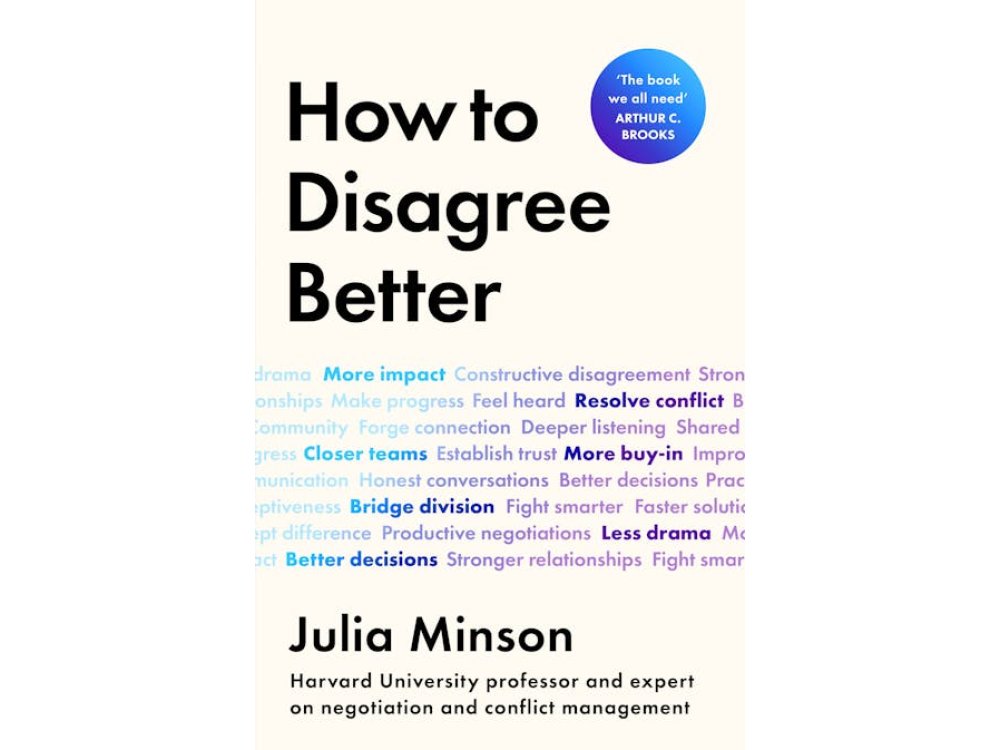
In this revolutionary book, pioneering Harvard Kennedy School professor and behavioral scientist Julia Minson reveals the counterintuitive secret to a life of less drama and more impact.
We are in a disagreement crisis. The average person would rather go to the dentist than have a twenty-minute conversation with someone that they strongly disagree with. Yet disagreement is both inevitable and essential for everything from navigating decisions at home to running innovative and agile companies to governing democratic societies.
In How to Disagree Better, Minson brings to bear her decades of research into understanding the psychology of disagreement and its relevance to negotiations, conflict resolution, and decision-making, revealing the hidden skill that all the best mediators and negotiators share: displaying receptiveness to opposing views.
The science shows that receptive individuals don't just fight less, they also get more done-they are better decision-makers, better peacemakers, and yes, better influencers than the rest of us. Through original research and case studies, How to Disagree Better will show you why traditional persuasion strategies don't work as well as you think they do, how you can bridge division and reach better outcomes simply by utilising receptiveness strategies, and that disagreeing better is a skill all of us can learn to apply at home, at work, and with our neighbors.
Description
Master the art of disagreement for less conflict and more connection.
In this revolutionary book, pioneering Harvard Kennedy School professor and behavioral scientist Julia Minson reveals the counterintuitive secret to a life of less drama and more impact.
We are in a disagreement crisis. The average person would rather go to the dentist than have a twenty-minute conversation with someone that they strongly disagree with. Yet disagreement is both inevitable and essential for everything from navigating decisions at home to running innovative and agile companies to governing democratic societies.
In How to Disagree Better, Minson brings to bear her decades of research into understanding the psychology of disagreement and its relevance to negotiations, conflict resolution, and decision-making, revealing the hidden skill that all the best mediators and negotiators share: displaying receptiveness to opposing views.
The science shows that receptive individuals don't just fight less, they also get more done-they are better decision-makers, better peacemakers, and yes, better influencers than the rest of us. Through original research and case studies, How to Disagree Better will show you why traditional persuasion strategies don't work as well as you think they do, how you can bridge division and reach better outcomes simply by utilising receptiveness strategies, and that disagreeing better is a skill all of us can learn to apply at home, at work, and with our neighbors.