Add to wishlist
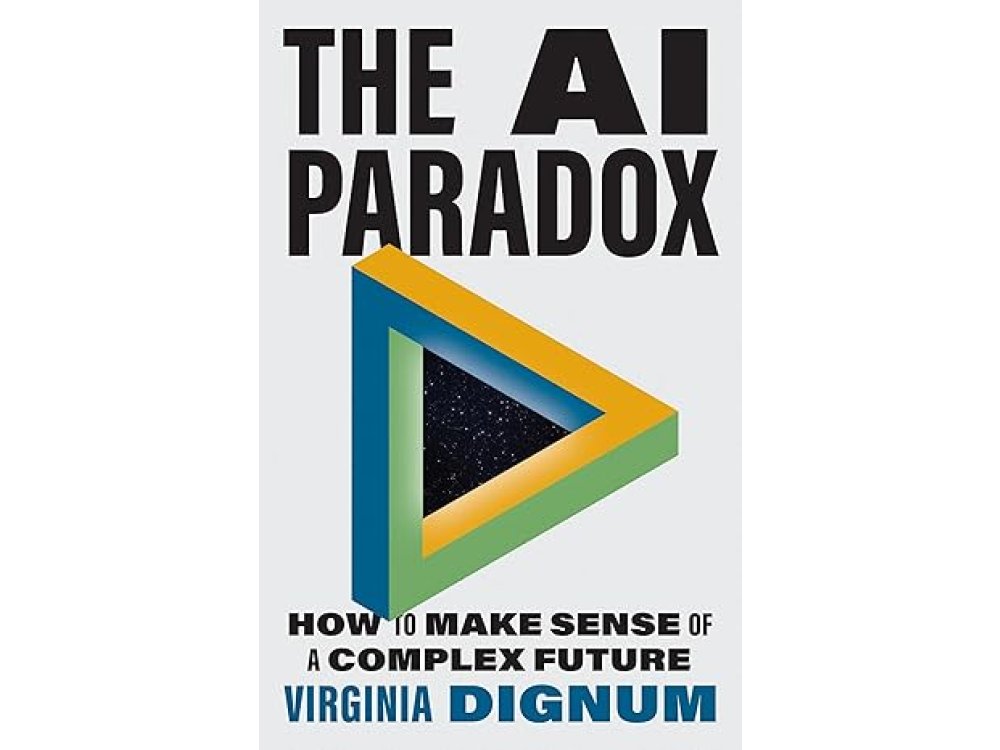
Artificial intelligence will shape our future in unforeseen ways, and it is easy to fall into the trap of thinking that it could someday dictate the terms of our very existence. But the fact is, the more that AI can do, the more it underscores the irreplaceable qualities of human creativity, empathy, and moral reasoning. This is one of the eight paradoxes of AI that Virginia Dignum explores in this revelatory book. Drawing on her decades of experience in AI research and governance, Dignum cuts through the hype and sensationalism that often surround AI and reveals why the most profound questions it raises are not about technology but ourselves.
The AI Paradox is a guide to seeing complexity with clarity, questioning the seemingly inevitable, and using AI in ways that prioritize our collective values. Each paradox explored in this book illuminates a particular dimension of these emerging technologies while prompting us to reevaluate our most common preconceptions about them. Can they truly replicate human decision making or do they simply magnify our blind spots and biases? Is AI the ultimate problem-solving tool or does it introduce more problems? Is justice for all achievable when it comes to AI? Who does AI serve, big tech or the common good? How do we even define AI?
With thought-provoking examples and paradoxical insights, this powerful little book challenges us to reimagine the role of these technologies in our lives, advocating for a collaborative, transparent, and inclusive approach that keeps humanity at the core of AI innovation.
Description
Artificial intelligence will shape our future in unforeseen ways, and it is easy to fall into the trap of thinking that it could someday dictate the terms of our very existence. But the fact is, the more that AI can do, the more it underscores the irreplaceable qualities of human creativity, empathy, and moral reasoning. This is one of the eight paradoxes of AI that Virginia Dignum explores in this revelatory book. Drawing on her decades of experience in AI research and governance, Dignum cuts through the hype and sensationalism that often surround AI and reveals why the most profound questions it raises are not about technology but ourselves.
The AI Paradox is a guide to seeing complexity with clarity, questioning the seemingly inevitable, and using AI in ways that prioritize our collective values. Each paradox explored in this book illuminates a particular dimension of these emerging technologies while prompting us to reevaluate our most common preconceptions about them. Can they truly replicate human decision making or do they simply magnify our blind spots and biases? Is AI the ultimate problem-solving tool or does it introduce more problems? Is justice for all achievable when it comes to AI? Who does AI serve, big tech or the common good? How do we even define AI?
With thought-provoking examples and paradoxical insights, this powerful little book challenges us to reimagine the role of these technologies in our lives, advocating for a collaborative, transparent, and inclusive approach that keeps humanity at the core of AI innovation.