Add to wishlist
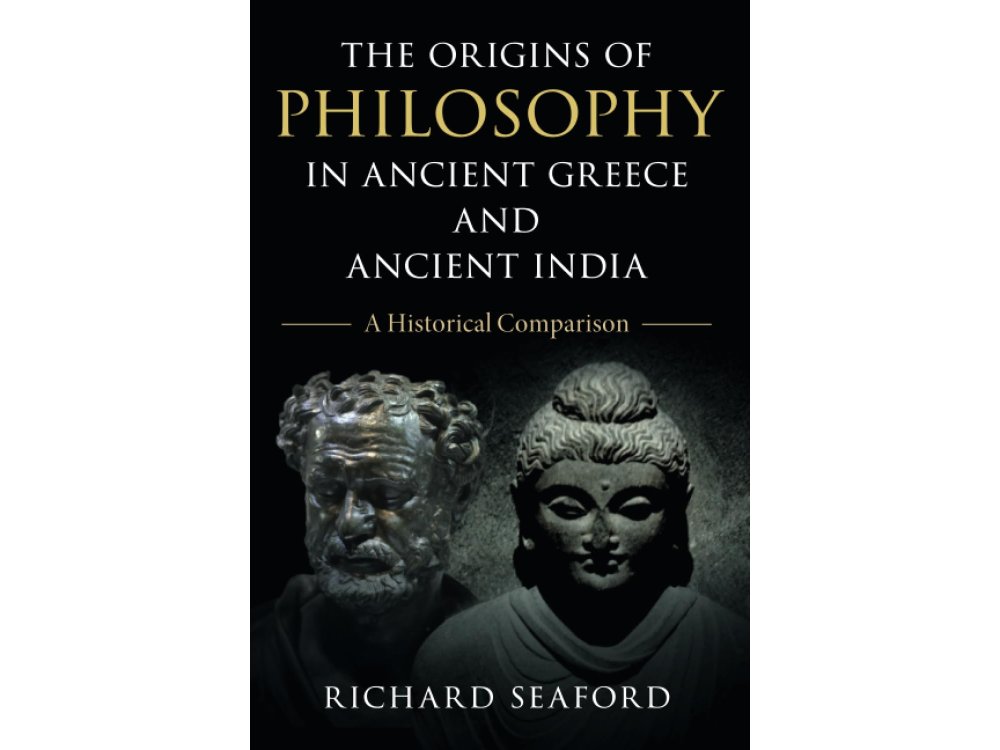
Why did Greek philosophy begin in the sixth century BCE? Why did Indian philosophy begin at about the same time? Why did the earliest philosophy take the form that it did? Why was this form so similar in Greece and India? And how do we explain the differences between them? These questions can only be answered by locating the philosophical intellect within its entire societal context, ignoring neither ritual nor economy. The cities of Greece and northern India were in this period distinctive also by virtue of being pervasively monetised. The metaphysics of both cultures is marked by the projection (onto the cosmos) and the introjection (into the inner self) of the abstract, all-pervasive, quasi-omnipotent, impersonal substance embodied in money (especially coinage). And in both cultures this development accompanied the interiorisation of the cosmic rite of passage (in India sacrifice, in Greece mystic initiation).
Part I. Introductory:
1. Summary
2. Explanations
Part II. The Earliest Texts:
3. Sacrifice and reciprocity in the earliest texts
4. Self, society, and universe in the earliest texts
Part III. Unified Self, Monism, And Cosmic Cycle in India:
5. The economics of sacrifice
6. Inner self and universe
7. The powerful individual
8. The formation of monism
9. The hereafter
10. Reincarnation and karma
Part IV. Unified Self, Monism, And Cosmic Cycle in Greece:
11. Psuchē and the interiorisation of mystery-cult
12. Monism and inner self
13. Money and the inner self in Greece
14. Community and individual
15. Plato
Part V. Conclusion:
16. The complex imagining of universe and inner self
17. Ritual, money, society and metaphysics.
Description
Why did Greek philosophy begin in the sixth century BCE? Why did Indian philosophy begin at about the same time? Why did the earliest philosophy take the form that it did? Why was this form so similar in Greece and India? And how do we explain the differences between them? These questions can only be answered by locating the philosophical intellect within its entire societal context, ignoring neither ritual nor economy. The cities of Greece and northern India were in this period distinctive also by virtue of being pervasively monetised. The metaphysics of both cultures is marked by the projection (onto the cosmos) and the introjection (into the inner self) of the abstract, all-pervasive, quasi-omnipotent, impersonal substance embodied in money (especially coinage). And in both cultures this development accompanied the interiorisation of the cosmic rite of passage (in India sacrifice, in Greece mystic initiation).