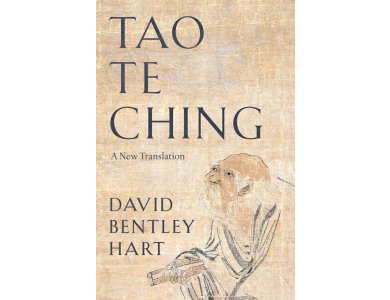
Laozi, also spelt as Lao Tzu and Laou-tsze, was a legendary Chinese philosopher considered to be the author of the Tao Te Ching (Pinyin: Dào Dé Jīng), one of the foundational texts of Taoism. Modern scholarship generally regards his biographical details as later inventions and his opus a collaboration of various writers, with the name Laozi, literally meaning 'Old Master', likely intended to portray an archaic anonymity that could converse with Confucianism. Traditional accounts addend him as Li Er, born in the 6th-century BC state of Chu during China's Spring and Autumn period (c. 770 – c. 481 BC). Serving as the royal archivist for the Zhou court at Wangcheng (modern Luoyang), he met and impressed Confucius (c. 551 – c. 479 BC) on one occasion, composing the Dào Dé Jīng in a single session before retiring into the western wilderness.