Add to wishlist
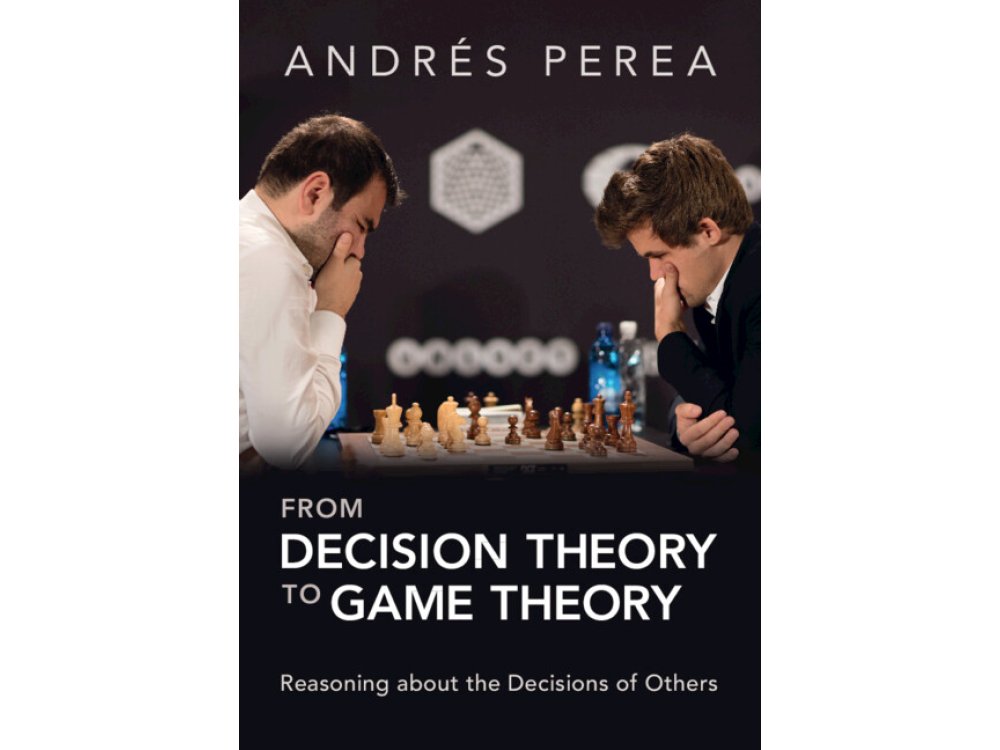
From Decision Theory to Game Theory shows how the reasoning patterns of common belief in rationality, correct beliefs and symmetric beliefs can be defined in a unified way. It explores the link between decision theory and game theory, particularly how various important classes of games (e.g., games with incomplete information, games with unawareness and psychological games), can be analysed from both a unified decision-theoretic and unified interactive-reasoning perspective. Providing a smooth transition between one-person decision theory and game theory, it views each game as a collection of one-person decision problems – one for every player. Written in a non-technical style, this book includes practical problems and examples from everyday life to make the material more accessible. The book is targeted at a wide audience, including students and scholars from economics, mathematics, business, philosophy, logic, computer science, artificial intelligence, sociology and political science.
Description
From Decision Theory to Game Theory shows how the reasoning patterns of common belief in rationality, correct beliefs and symmetric beliefs can be defined in a unified way. It explores the link between decision theory and game theory, particularly how various important classes of games (e.g., games with incomplete information, games with unawareness and psychological games), can be analysed from both a unified decision-theoretic and unified interactive-reasoning perspective. Providing a smooth transition between one-person decision theory and game theory, it views each game as a collection of one-person decision problems – one for every player. Written in a non-technical style, this book includes practical problems and examples from everyday life to make the material more accessible. The book is targeted at a wide audience, including students and scholars from economics, mathematics, business, philosophy, logic, computer science, artificial intelligence, sociology and political science.

.jpg)