Προσθήκη στα αγαπημένα
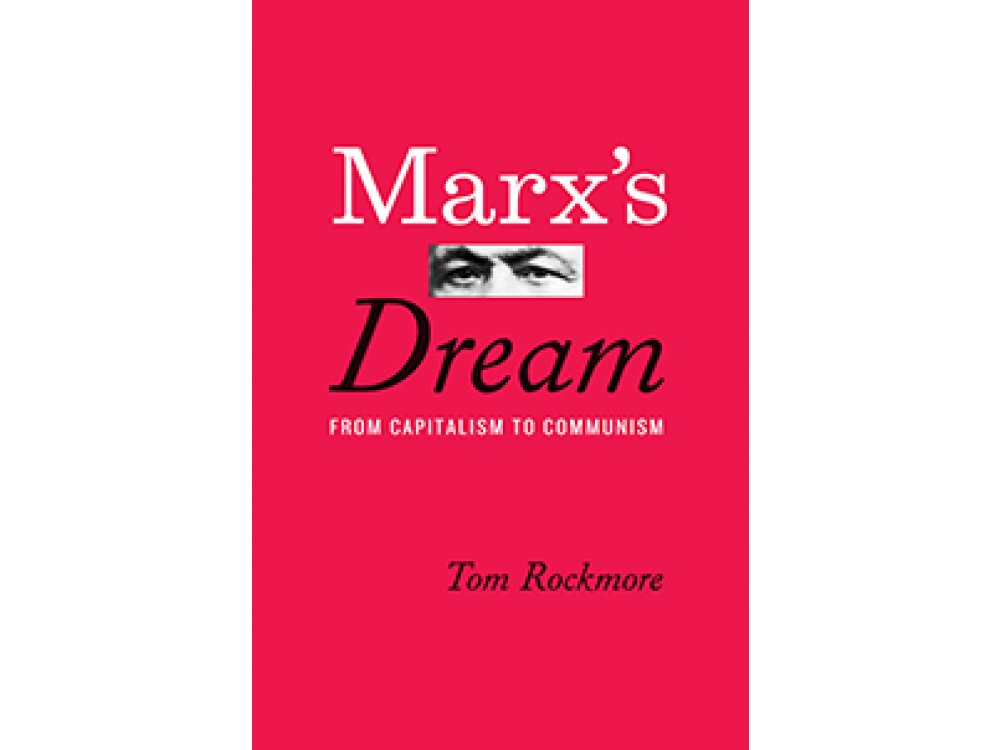
Two centuries after his birth, Karl Marx is read almost solely through the lens of Marxism, his works examined for how they fit into the doctrine that was developed from them after his death.
With Marx’s Dream, Tom Rockmore offers a much-needed alternative view, distinguishing rigorously between Marx and Marxism. Rockmore breaks with the Marxist view of Marx in three key ways. First, he shows that the concern with the relation of theory to practice—reflected in Marx’s famous claim that philosophers only interpret the world, while the point is to change it—arose as early as Socrates, and has been central to philosophy in its best moments. Second, he seeks to free Marx from his unsolicited Marxist embrace in order to consider his theory on its own merits. And, crucially, Rockmore relies on the normal standards of philosophical debate, without the special pleading to which Marxist accounts too often resort. Marx’s failures as a thinker, Rockmore shows, lie less in his diagnosis of industrial capitalism’s problems than in the suggested remedies, which are often unsound.
Only a philosopher of Rockmore’s stature could tackle a project this substantial, and the results are remarkable: a fresh Marx, unencumbered by doctrine and full of insights that remain salient today.
Introduction
Part One On Marx’s Theory of Practice
On Culture and Civilization
Plato’s Republic and Human Flourishing
Rousseau’s Problem
On Property, Private Property, and Human Flourishing
Hegel, Recognition, and the Modern State
Hegel on Human Flourishing in the Modern State
Hegel and Economic Flourishing
Marx’s Critique of Hegel’s Elements of the Philosophy of Right
Marx on Theory, Practice, and Changing the World
On the Marxian Subject
Feuerbach, Fichte, and the Marxian Subject
On the Marxian Alternative to Modern Political Economy
Marxian Political Economy as Economic Constructivism
Marx on Human Flourishing and Communism
Human Flourishing as Social Freedom
Part Two Marx and Marxism on Materialism, Feuerbach, and Hegel
What Is Materialism?
Materialism in Marx’s Early Writings
Engels’s (Marxist) View of Feuerbach
Materialism, Idealism, and The German Ideology
Marx’s (Non-Marxist) View of Feuerbach
Marx’s “Theses on Feuerbach”
Vico, Materialism, and Constructivism in Capital
Materialism, Dialectic, and the Second Afterword to Capital
Excursus on the Reflection Theory of Knowledge
On Hegel’s Dialectical Theory of Cognition
Marx on Hegelian Dialectic
Part Three On the Practice of Marx’s Theory, or the Transition from Capitalism to Communism
1. Transition through the Revolutionary Proletariat
2. Transition through Economic Crisis
3. Transition through Politics
4. Transition through Critical Social Theory
Conclusion: Marx’s Dream
Notes
Index
Περιγραφή
Two centuries after his birth, Karl Marx is read almost solely through the lens of Marxism, his works examined for how they fit into the doctrine that was developed from them after his death.
With Marx’s Dream, Tom Rockmore offers a much-needed alternative view, distinguishing rigorously between Marx and Marxism. Rockmore breaks with the Marxist view of Marx in three key ways. First, he shows that the concern with the relation of theory to practice—reflected in Marx’s famous claim that philosophers only interpret the world, while the point is to change it—arose as early as Socrates, and has been central to philosophy in its best moments. Second, he seeks to free Marx from his unsolicited Marxist embrace in order to consider his theory on its own merits. And, crucially, Rockmore relies on the normal standards of philosophical debate, without the special pleading to which Marxist accounts too often resort. Marx’s failures as a thinker, Rockmore shows, lie less in his diagnosis of industrial capitalism’s problems than in the suggested remedies, which are often unsound.
Only a philosopher of Rockmore’s stature could tackle a project this substantial, and the results are remarkable: a fresh Marx, unencumbered by doctrine and full of insights that remain salient today.