Αρχική / Ανθρωπιστικές Επιστήμες / Φιλοσοφία / Nature and Selected Essays

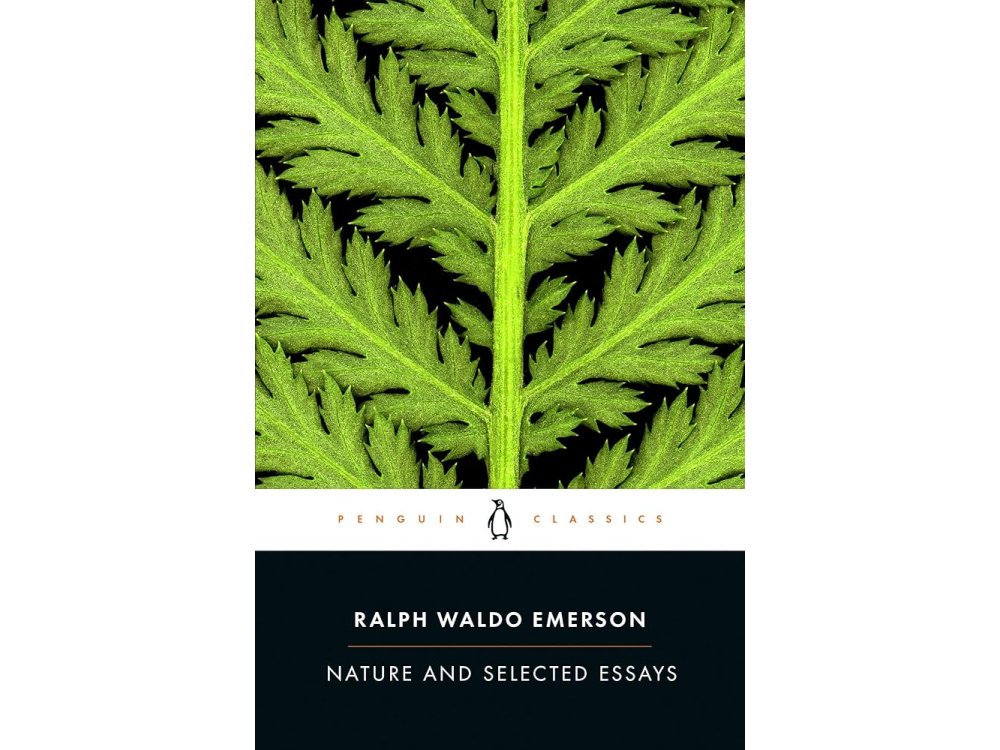
Nature and Selected Essays

ΣΥΓΓΡΑΦΕΑΣ
Τιμή
16,40 €
18,20 € -10%
Διαθέσιμο κατόπιν παραγγελίας
Αποστέλλεται σε 15 - 25 ημέρες.

Προσθήκη στα αγαπημένα

Known for challenging traditional thought and for his faith in the individual, Emerson was the chief spokesman for the Transcendentalist movement. His poems speak to his most passionately held belief: that external authority should be disregarded in favor of one's own experience. From the embattled farmers who "fired the shot heard round the world" in the stirring "Concord Hymn," to the flower in "The Rhodora," whose existence demonstrates "that if eyes were made for seeing, / Then Beauty is its own excuse for being," Emerson celebrates the existence of the sublime in the human and in nature. Combining intensity of feeling with his famous idealism, Emerson's poems reveal a moving, more intimate side of the man revered as the Sage of Concord.


Συγγραφέας: Emerson Ralph Waldo
Εκδότης: PENGUIN
Σελίδες: 344
ISBN: 9780142437629
Εξώφυλλο: Μαλακό Εξώφυλλο
Αριθμός Έκδοσης: 1
Έτος έκδοσης: 2003

Ralph Waldo Emerson, the son of a Unitarian minister and a chaplain during the American Revolution, was born in 1803 in Boston. He attended the Boston Latin School, and in 1817 entered Harvard, graduating in 1820. Emerson supported himself as a schoolteacher from 1821-26. In 1826 he was "approbated to preach," and in 1829 became pastor of the Scond Church (Unitarian) in Boston. That same year he married Ellen Louise Tucker, who was to die of tuberculosis only seventeen months later. In 1832 Emerson resigned his pastorate and traveled to Eurpe, where he met Coleridge, Wordsworth, and Carlyle. He settled in Concord, Massachusetts, in 1834, where he began a new career as a public lecturer, and married Lydia Jackson a year later. A group that gathered around Emerson in Concord came to be known as "the Concord school," and included Bronson Alcott, Henry David Thoreau, Nathaniel Hawthorne, and Margaret Fuller. Every year Emerson made a lecture tour; and these lectures were the source of most of his essays. Nature (1836), his first published work, contained the essence of his transcendental philosophy, which views the world of phenomena as a sort of symbol of the inner life and emphasizes individual freedom and self-reliance. Emerson's address to the Phi Beta Kappa society of Harvard (1837) and another address to the graduating class of the Harvard Divinity School (1838) applied his doctrine to the scholar and the clergyman, provoking sharp controversy. An ardent abolitionist, Emerson lectured and wrote widely against slavery from the 1840's through the Civil War. His principal publications include two volumes ofEssays (1841, 1844), Poems (1847), Representative Men (1850), The Conduct of Life (1860), and Society and Solitude (1870). He died of pneumonia in 1882 and was buried in Concord.

Σας προτείνουμε

Έχετε επισκεφτεί πρόσφατα

Newsletter

Εγγραφείτε στο newsletter για να λαμβάνετε πρώτοι τις νέες κυκλοφορίες και τις προσφορές μας
Ο λογαριασμός σας Τα αγαπημένας σας