Προσθήκη στα αγαπημένα
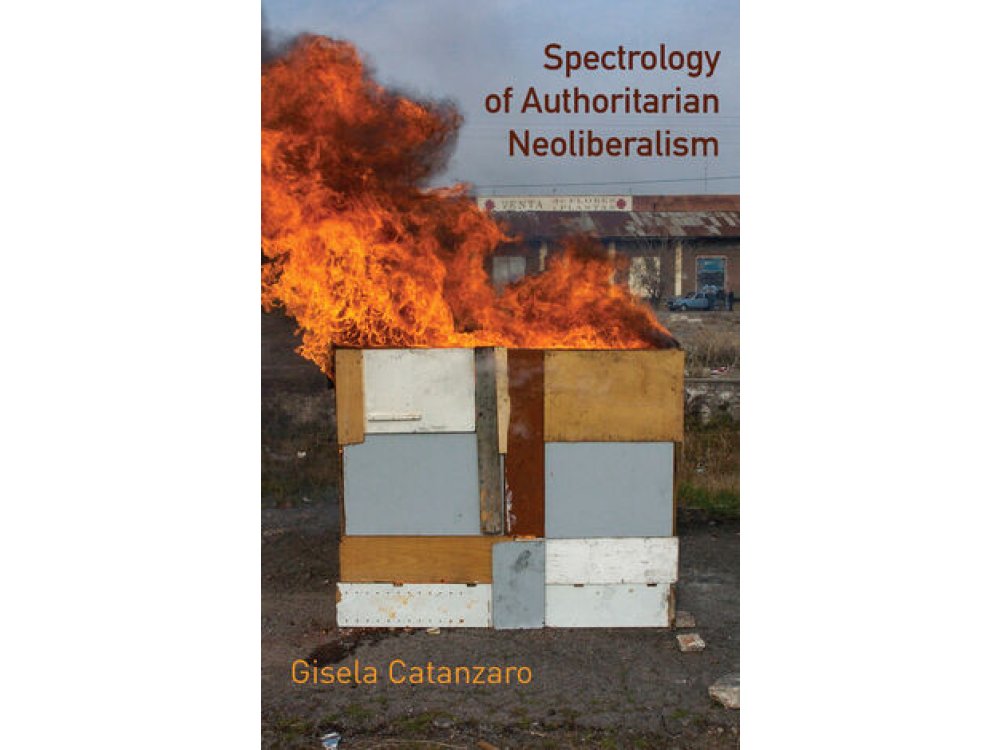
In the face of the global rise of authoritarian phenomena – from Trump in the United States to Macri and Milei in Argentina, Bolsonaro in Brazil, Modi in India, and Erdoðan in Turkey, and the increasing traction of Vox in Spain and the AfD in Germany – Gisela Catanzaro argues for the continued relevance of the concept of ideology for understanding contemporary social processes and political struggles.
Catanzaro places particular emphasis on the transformations of neoliberalism and its authoritarian traits, from its origins in Latin America, where it was forced onto societies through bloody coups during the 1970s, through a second phase, linked to globalization, that spread to many parts of the world in the late 1990s, and a more recent phase that has gained prominence since 9/11 and especially since the 2008 financial crisis. In this later phase, the authoritarian spirit of neoliberalism has again come to the forefront, but this time in the midst of formal democracies. Using Argentina as a paradigmatic case but ranging more widely, Catanzaro shows that the authoritarian neoliberalism of the present is driven by, and at the same time exacerbates, an elitist, punitive, sacrificial, anti-egalitarian, and anti-intellectual ideology that has left its traces in subjectivity and social processes.
By providing a rigorous exploration of the logic of authoritarian neoliberalism, this book makes a major contribution to understanding an ideology that is increasingly shaping our social and political world.
Foreword – Judith Butler
Introduction: How To Read Contemporary Neoliberalism?
Chapter 1: Neoliberalism's Inflections and the Triumph of the Punitive Imagination
From "the Cultural Turn" to the "Authoritarian Turns"
Punishment as ideology
The community of punishment
Chapter 2: Cruel Freedom
Neoliberalism and de-autonomy
Valences of anti-intellectualism
From cynicism to cruelty
Chapter 3: Is The Critique of Ideology Obsolete?
Marxian mythologiques
Upholding dissonance
Chapter 4: Paradoxes of Autonomy (and Its Critique): Judith Butler and Theodor Adorno
Minima Moralia, again
Ambiguous fragility
Toward a dialectic of autonomy
Chapter 5: Neoliberal Sensibilities
Late capitalism and models of justice
Conservative deregulation: "the Neoliberal Frankenstein"
Neoliberal sensibilities in 21st century Argentina
Chapter 6: Authoritarian Neoliberalism and the National Question
From the picaresque to sadomasochistic joy
Between submission and fauna: neocolonialism and de-historicization
Chapter 7: Dialectic of the University
Universities and neoliberalism
The Argentine free public university: estrangement or radical critique?
The university and the critique of the present
Chapter 8: Spectrology of the Right
What remains
Right reloaded
Cultural revolution and authoritarian sensibilities
Chapter 9: Chainsaw Capitalism: The Milei Moment
Political responses to the crisis of neoliberal capitalism: from order to disinhibition
Agitation without utopia, anti-intellectualism and affective exploitation
Walls and chainsaws: Towards a critique of borderless authoritarianism
There is no neutrality in the "globe". Brief history from the Southern Cone
Notes
Περιγραφή
In the face of the global rise of authoritarian phenomena – from Trump in the United States to Macri and Milei in Argentina, Bolsonaro in Brazil, Modi in India, and Erdoðan in Turkey, and the increasing traction of Vox in Spain and the AfD in Germany – Gisela Catanzaro argues for the continued relevance of the concept of ideology for understanding contemporary social processes and political struggles.
Catanzaro places particular emphasis on the transformations of neoliberalism and its authoritarian traits, from its origins in Latin America, where it was forced onto societies through bloody coups during the 1970s, through a second phase, linked to globalization, that spread to many parts of the world in the late 1990s, and a more recent phase that has gained prominence since 9/11 and especially since the 2008 financial crisis. In this later phase, the authoritarian spirit of neoliberalism has again come to the forefront, but this time in the midst of formal democracies. Using Argentina as a paradigmatic case but ranging more widely, Catanzaro shows that the authoritarian neoliberalism of the present is driven by, and at the same time exacerbates, an elitist, punitive, sacrificial, anti-egalitarian, and anti-intellectual ideology that has left its traces in subjectivity and social processes.
By providing a rigorous exploration of the logic of authoritarian neoliberalism, this book makes a major contribution to understanding an ideology that is increasingly shaping our social and political world.