Προσθήκη στα αγαπημένα
The insider account of how humanoid robotics is evolving into a global commercial movement
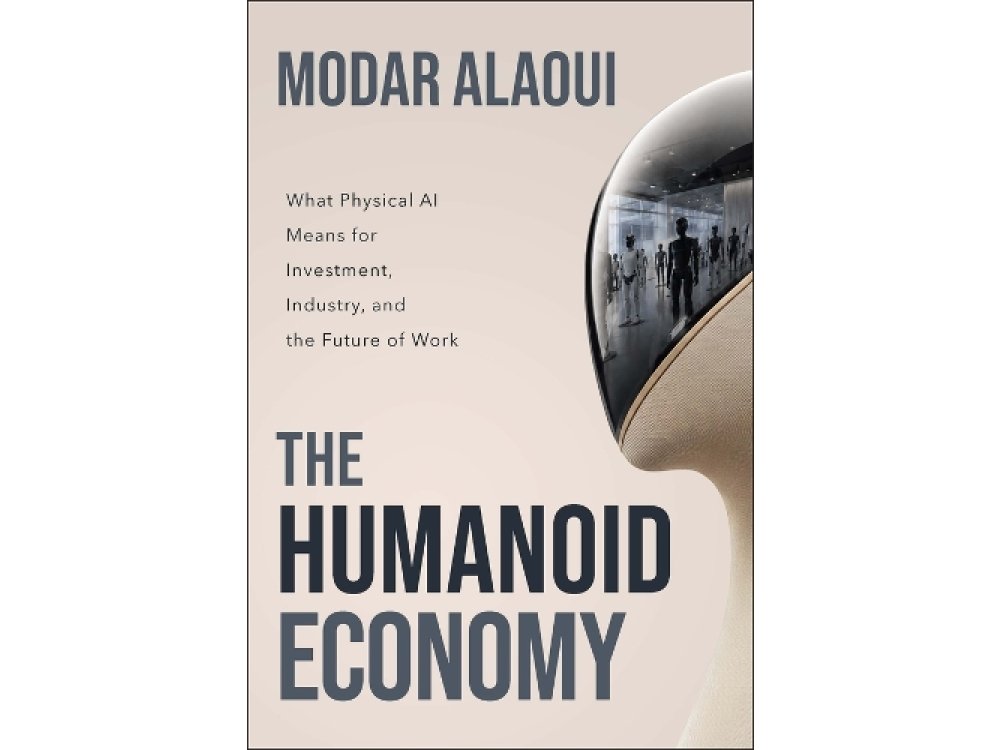
The humanoid robotics market will reach multi-trillion-dollar scale over the coming decades, with projections of up to $5T by 2050. The Humanoid Economy: What Physical AI Means for Investment, Industry, and the Future of Work maps the full architecture of this shift—its technical foundations, financial realities, cultural dynamics, and geopolitical stakes—written by a venture capitalist and ecosystem builder at the center of the field.
Across seven chapters, The Humanoid Economy traces why the humanoid form factor fits human-built environments, how convergences in AI maturity and global labor shortages created the inflection point, what it takes to engineer and deploy a humanoid system, and how venture capital, policy frameworks, safety standards, and global summits combined to build an entire ecosystem around the field.
Readers will also discover:
Written for venture capitalists, C-suite executives, robotics founders, and policymakers, The Humanoid Economy delivers the technical depth, financial analysis, and strategic perspective required to evaluate and participate in the transition from fragmented robotics research to coordinated global commercialization.
Introduction xiii
Chapter 1 Why Humanoids, Not Just Robots 1
Robotics' Turning Point 2
The Beginning of Understanding 3
A New Foundation 5
The World Around Us Is Built for Humans 6
Designing for Humanity 7
The Payoffs 8
Making Humanoids Fit 10
The Senses Humanoids Need 11
What Humanoids Sense 11
How Sensing Works Together 12
Human Acceptance 14
Forming Acceptance 15
Acceptance and Scale 16
Form, Familiarity, and the Physical Language of Machines 17
The Co-Evolution of Humans and Technology 22
The Loop in Practice 23
How the Loop Shapes Scale 24
Chapter 2 The Missing Ecosystem I Had to Build 27
Before the Humanoid Momentum Took Shape 28
Isolated Breakthroughs 28
The Gap Between Progress and Readiness 29
Scattered Efforts Without a System 30
The Cost of Independence 31
Why the Signals Were Misread 33
When the Missing Ecosystem Became Clear 37
A Global Convergence 38
The US Landscape: Talent Without Connection 39
The Forces That Finally Aligned 41
Technical Foundations: AI and Hardware 41
Market Conditions: Cost, Operators, and Culture 42
The Power of Alignment 43
When the Path Became Clear Enough to Act 44
From Difficulty to Inevitability 45
The Decision to Act 46
The Commitment to Build 47
Chapter 3 Building the Infrastructure for a Movement 49
Launching the Venture Capital Fund as the First Piece of Infrastructure 50
The Investment Thesis 51
Why This Path 53
Past Robotics Struggles 54
The Master Plan Behind the Ecosystem I Built 59
The Builders Who Revealed the Gaps: The First Layer of Insight 60
The Humanoids Summit: The Center of Gravity for a Global Movement 61
Establishing the Humanoids Summit 62
The First Edition 65
Scaling the Summit into a Global Ecosystem Engine 68
From Global Summit to Global Platform 70
Standards and Safety: The Structure Beneath Deployment 75
The Missing Layer in Deployment 76
From Standards to Deployment: The Missing Layer 77
Deployment Governance: The HOMES Framework 78
Regional Anchoring: Bay Area Robotics Association (BARA) 80
A Working Layer 81
Hidden Inefficiencies 81
No Theater 83
International Humanoids Day: A Cultural Anchor for the Field 85
What Took Shape 85
12/12 Symmetry 86
Shift in Perception 86
Policy Framework: The Humanoids Act Proposal 90
Fit to Human Environments 91
Standards in Practice 92
Regional Nodes: How the Ecosystem Became Global 93
Complementary Regional Strengths 93
The Need for Cross-Regional Alignment 94
Putting the Pieces Together—Infrastructure as Strategy 97
One System, Not Many 97
How the Pieces Reinforce Each Other 99
Why This Field Is Different 100
Chapter 4 The Architecture of a Humanoid 103
The Five Pillars 104
Sensing: Where Reality Pushes Back First 104
Actuation and Power: Where Physics Stops Negotiating 108
Compute and Control: Where Time Becomes the Bottleneck 110
Manipulation and Dexterity: Where Usefulness Becomes Visible 113
Balance and Locomotion: Where Stability Is Negotiated 117
Integration: Why Humanoids Are Systems, Not Products 119
Failure as the Default State 121
Safety as an Architectural Constraint 124
Reliability as an Architectural Outcome 127\
Specificity in Humanoid Design 131
Generalization Is the Real Constraint 134
The Variability of Real Environments 134
Why Generalization Is Difficult 135
The Limits of Optimization 135
From Demonstrations to Deployment 136
Stability, Predictability, and Trust 136
Generalization as the Bottleneck to Scale 137
Chapter 5 Funding Human-Like Machines at Scale 139
When Capital Meets Physical AI 140
The First Collision with Physical Reality 141
How Physical Risk Compounds 141
Why Physical AI Requires a Different Risk Model 142
When Capital Misreads Progress 143
How Markets Recalibrate 144
The Economic Interface Between Humans and Humanoids 145
What the Economic Interface Actually Does 146
How Work Gets Defined and Measured 147
Accountability and Trust 148
How the Interface Shapes Progress 148
The Phase Where Most Humanoid Companies Stall 150
The Metrics That Mislead 151
How Companies Escape the Stall 151
How Capital Markets Learn 152
The Signals That Confused Early Capital 152
How Markets Learned to Read Differently 153
Chapter 6 Making Humanoids Culturally Acceptable 155
Why the Fear of Human Replacement Dominates 155
How the Story Builds 156
Why the Fear Persists 158
Humanoids Will Not Replace Humans 159
What History Actually Shows 160
What Operators Actually See 162
The Work That Remains Human 162
Judgment, Responsibility, and Coordination 163
The Moment a Humanoid Enters Human Space 165
What Presence Demands 167
How Fear Changes Form 168
When Work Is Reevaluated 169
What Exposure Reveals 170
What Remains Human 171
Culture Is the Real Constraint 172
Acceptance Is Never Settled 175
What Culture Remembers 176
Chapter 7 The Global Stakes 179
Why Humanoids Become Strategic National Assets 180
What Strategic Attention Brings 181
The Risk of Fragmentation 183
How Strategic Attention Reshapes the Ecosystem 183
Standards, Evidence, and the New Currency of Trust 184
The Cost of Closing Doors 186
Fragmentation or Coordination 186
The Cost of Divergence 187
The Narrow Window for Alignment 187
Regional Gravity Without National Stereotypes 188
Four Patterns of Regional Default 189
Navigating Without Chasing Uniformity 190
Governance Becomes Infrastructure 191
Where Governance Becomes Unavoidable 192
The Infrastructure That Emerges 193
Choosing the Shape of What Comes Next 194
Where Responsibility Becomes Operational 195
Where Leadership Emerges 195
Epilogue Humanoids 2.0—What Comes After First Contact with the Real World 199
The Real-World Deployment Phase 199
The Moral Decisions and Ethical Frameworks Phase 200
The Global Transformation Phase 201
About the Author 203
Acknowledgments 205
Index 207
Περιγραφή
The insider account of how humanoid robotics is evolving into a global commercial movement
The humanoid robotics market will reach multi-trillion-dollar scale over the coming decades, with projections of up to $5T by 2050. The Humanoid Economy: What Physical AI Means for Investment, Industry, and the Future of Work maps the full architecture of this shift—its technical foundations, financial realities, cultural dynamics, and geopolitical stakes—written by a venture capitalist and ecosystem builder at the center of the field.
Across seven chapters, The Humanoid Economy traces why the humanoid form factor fits human-built environments, how convergences in AI maturity and global labor shortages created the inflection point, what it takes to engineer and deploy a humanoid system, and how venture capital, policy frameworks, safety standards, and global summits combined to build an entire ecosystem around the field.
Readers will also discover:
Written for venture capitalists, C-suite executives, robotics founders, and policymakers, The Humanoid Economy delivers the technical depth, financial analysis, and strategic perspective required to evaluate and participate in the transition from fragmented robotics research to coordinated global commercialization.