Προσθήκη στα αγαπημένα
"Maxwell is without a peer … this printing is an opportunity to become thoroughly acquainted with the thought of the greatest of our electrical scientists." — School Science and Math.
Here is the final elaboration of Maxwell's theory of electromagnetism, including the systematic and rigorous derivation of his general equations of field theory. These equations continue to occupy a central position in the modern physicist's view of the physical world. They are a magnificent summary of the fundamental advances in electricity and magnetism, and later inspired the theories of Lorentz on the electron and Einstein on relativity. Einstein himself has said that "The formulation of these equations is the most important event in physics since Newton's time" — The Evolution of Physics.
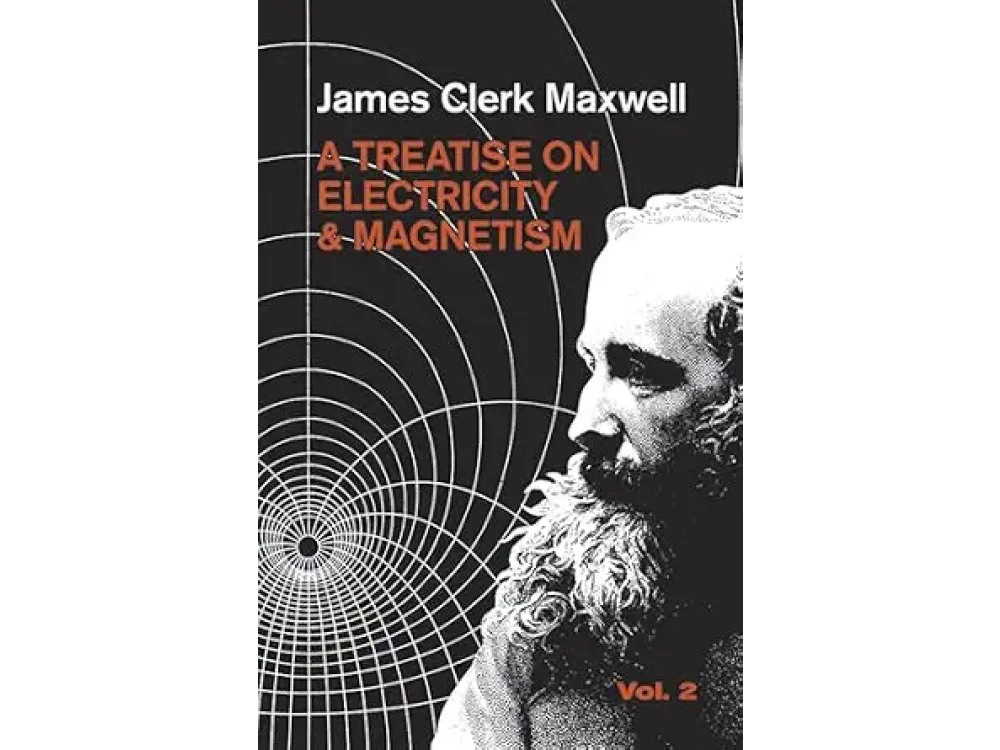
Volume 2, Part III, "Magnetism," develops a theory of magnetism through the study of solenoids and shells, magnetic induction, methods of observation, and terrestrial magnetism. Part IV, "Electromagnetism," covers the mutual action of electric currents, the equations of motion of a connected system, Maxwell's dynamical theory of electromagnetism, the equations of the electromagnetic field, dimensions of electric units, parallel and circular currents, coils, and the electromagnetic theory of light and foundation of the theory of relativity.
Περιγραφή
"Maxwell is without a peer … this printing is an opportunity to become thoroughly acquainted with the thought of the greatest of our electrical scientists." — School Science and Math.
Here is the final elaboration of Maxwell's theory of electromagnetism, including the systematic and rigorous derivation of his general equations of field theory. These equations continue to occupy a central position in the modern physicist's view of the physical world. They are a magnificent summary of the fundamental advances in electricity and magnetism, and later inspired the theories of Lorentz on the electron and Einstein on relativity. Einstein himself has said that "The formulation of these equations is the most important event in physics since Newton's time" — The Evolution of Physics.
Volume 2, Part III, "Magnetism," develops a theory of magnetism through the study of solenoids and shells, magnetic induction, methods of observation, and terrestrial magnetism. Part IV, "Electromagnetism," covers the mutual action of electric currents, the equations of motion of a connected system, Maxwell's dynamical theory of electromagnetism, the equations of the electromagnetic field, dimensions of electric units, parallel and circular currents, coils, and the electromagnetic theory of light and foundation of the theory of relativity.