Add to wishlist
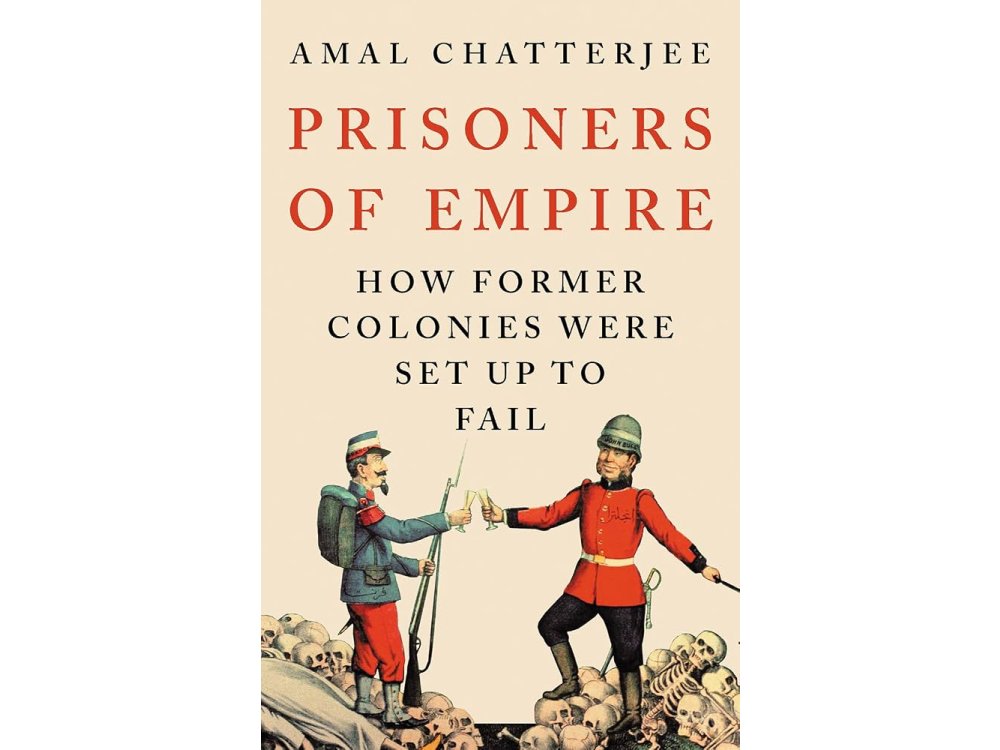
Why do some former colonies fail, staggering from crisis to crisis, while others recover? Why did so many succumb to dictatorship, corruption, civil war and instability after independence?
Amal Chatterjee argues that these ‘failures’ are underpinned by persistent, robust colonial structures which preserve and reproduce the oppressive, exploitative systems of the past. From land ownership to mining, transport networks to education provision, morality to law, many post-colonial institutions function almost exactly as they did under foreign rule, with power still concentrated in the hands of elites, and inequalities baked in. Drawing on a wide range of contemporary and historical material, including memoirs, economic data and administrative documents, Chatterjee explains how empire not only made its colonies into places of extraction and exploitation, but keeps them there today. Offering a truly global account–from the British Empire to the Belgian, from Mexico to Mozambique, from the Sahel to Sri Lanka–he shows how extractive capitalism and colonialism are intertwined, and how human rights and development are hostage to the imperatives of profit-making.
The world built by empire can still be challenged and changed–but to design a new, equitable future for all, we must first understand the legacies of the past.
Prologue: Roman Roads and Failing States
PART I: The Framework
1. Plunder made Permanent
2. Being Haiti, or the invention of permanent debt
Intermission
3. Administrators and Education
4. Identities, Martial Peoples and Military Regimes
PART II: The State of the Nations
5. Africa
6. Asia
7. North Africa and West Asia (aka The Middle East)
8. The Americas
9. Remainder Territories: France Overseas to Danish-ruled Greenland
10. The Winners: How Colonialism Shapes the Colonisers
Conclusion: A Name, and Moving On
Acknowledgments
Notes
Extended Bibliography
Index
Description
Why do some former colonies fail, staggering from crisis to crisis, while others recover? Why did so many succumb to dictatorship, corruption, civil war and instability after independence?
Amal Chatterjee argues that these ‘failures’ are underpinned by persistent, robust colonial structures which preserve and reproduce the oppressive, exploitative systems of the past. From land ownership to mining, transport networks to education provision, morality to law, many post-colonial institutions function almost exactly as they did under foreign rule, with power still concentrated in the hands of elites, and inequalities baked in. Drawing on a wide range of contemporary and historical material, including memoirs, economic data and administrative documents, Chatterjee explains how empire not only made its colonies into places of extraction and exploitation, but keeps them there today. Offering a truly global account–from the British Empire to the Belgian, from Mexico to Mozambique, from the Sahel to Sri Lanka–he shows how extractive capitalism and colonialism are intertwined, and how human rights and development are hostage to the imperatives of profit-making.
The world built by empire can still be challenged and changed–but to design a new, equitable future for all, we must first understand the legacies of the past.