Add to wishlist
Reveals how decarbonisation became a global scramble for minerals, land and power.
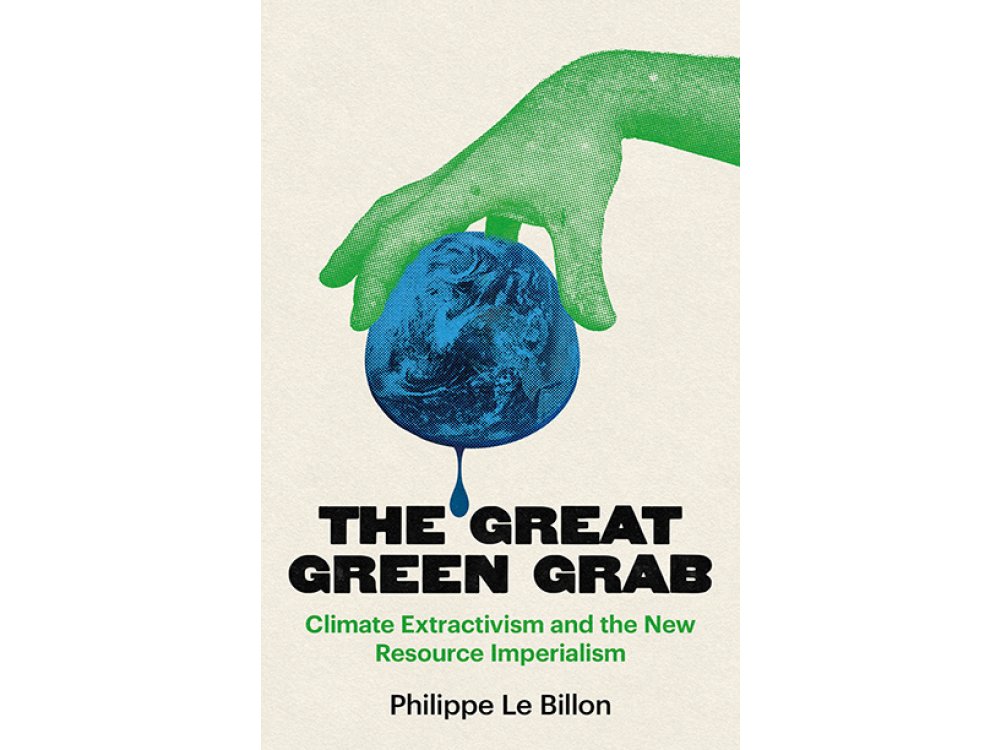
The spiralling climate crisis demands a rapid shift away from fossil fuels. But most current approaches to decarbonisation rely on a dramatic expansion of resource extraction–exacerbating environmental degradation and deepening global inequalities. This is the paradox of the so-called green transition.
Philippe Le Billon offers a critical examination of the material and political underpinnings of climate change mitigation. Drawing on insights from political ecology, critical geography and environmental justice, he interrogates the rise of ‘climate extractivism’: the opening up of new resource frontiers and the construction of infrastructure megaprojects in the name of sustainability. From artisanal cobalt mining in the DRC to rare-earth geopolitics, and from biofuel plantations to deep-sea and space mining, he reveals how green growth agendas frequently reproduce colonial structures, social injustice and patterns of dispossession.
Scrutinising proposed solutions such as geoengineering, carbon offsets, circular economy schemes and degrowth, Le Billon shows that many climate adaptation strategies remain tethered to considerations of economic growth and geopolitical competition. Rather than rejecting the urgency of climate transition, The Great Green Grab calls for a fairer, post-extractive future—one that wholly reshapes how we produce and consume energy, and fosters a more democratic, cooperative relationship with the earth.
A Note on Misuse
Preamble
1. Introduction
PART I: CLIMATE CRISIS AND THE TRANSITION IMPERATIVE
2. Climate Crisis, Green Transition, and Extractivism
3. The Extraction Gap
4. Green Rush Conflicts
PART II: BEYOND THE BRIGHT SIDE OF GREEN
5. Cobalt: Digging Pits With Bare Hands
6. Rare Earths: Melting Hills Beyond the Border
7. Lithium: Evaporating Water in Deserts
8. Deepsea Mining: Scraping the Bottom
9. Outerspace Mining: Capitalizing on the Heavens
PART III: RENEWABLE EXTRACTIVISM
10. Feeding the Machine: Biomass and Agro-Extractivism
11. Damming the Flow: Hydropower and Water Extractivism
12. Shining Bright: Solar Power 1
3. Winding Up: Wind Power
14. Greening Nukes: Nuclear Energy
PART IV: BACK TO EARTH
15. Carbon, Sunshine, and Geoengineering
16. Offsetting Extraction
17. Ending Fossil Fuel Extractivism
18. Greening Extraction?
19. Degrowth and Decolonizing Extractivism
20. Conclusion
Notes
Index
Description
Reveals how decarbonisation became a global scramble for minerals, land and power.
The spiralling climate crisis demands a rapid shift away from fossil fuels. But most current approaches to decarbonisation rely on a dramatic expansion of resource extraction–exacerbating environmental degradation and deepening global inequalities. This is the paradox of the so-called green transition.
Philippe Le Billon offers a critical examination of the material and political underpinnings of climate change mitigation. Drawing on insights from political ecology, critical geography and environmental justice, he interrogates the rise of ‘climate extractivism’: the opening up of new resource frontiers and the construction of infrastructure megaprojects in the name of sustainability. From artisanal cobalt mining in the DRC to rare-earth geopolitics, and from biofuel plantations to deep-sea and space mining, he reveals how green growth agendas frequently reproduce colonial structures, social injustice and patterns of dispossession.
Scrutinising proposed solutions such as geoengineering, carbon offsets, circular economy schemes and degrowth, Le Billon shows that many climate adaptation strategies remain tethered to considerations of economic growth and geopolitical competition. Rather than rejecting the urgency of climate transition, The Great Green Grab calls for a fairer, post-extractive future—one that wholly reshapes how we produce and consume energy, and fosters a more democratic, cooperative relationship with the earth.