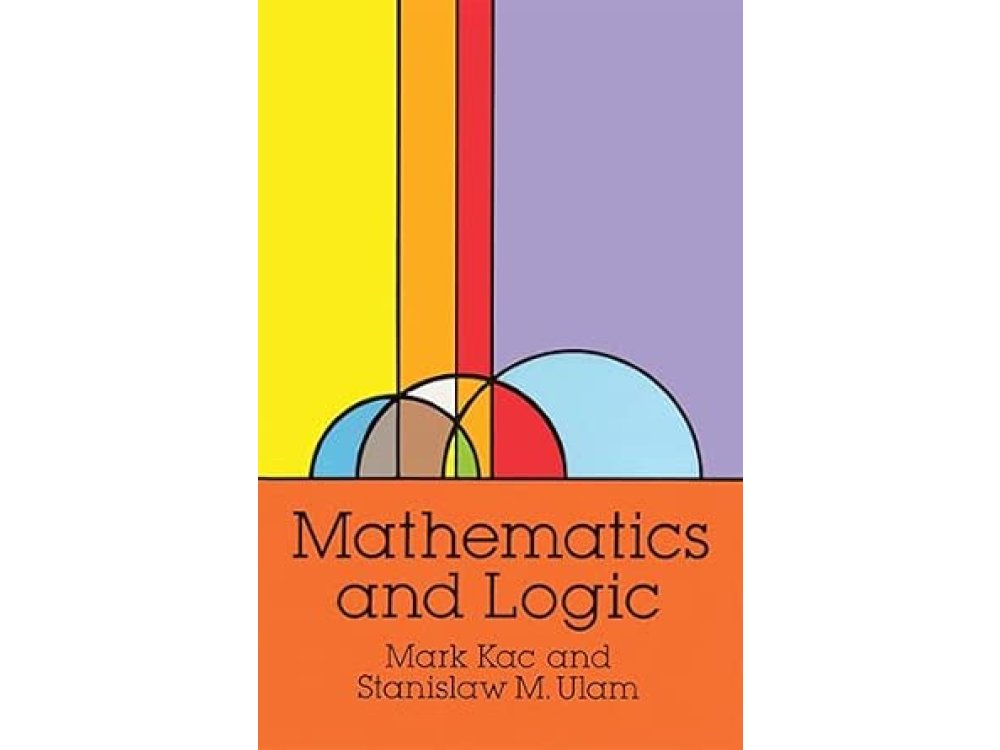
What is mathematics? How was it created and who were and are the people creating and practicing it? Can one describe its development and role in the history of scientific thinking and can one predict the future? This book is a thought-provoking attempt to answer such questions and to suggest the scope and depth of the subject. The volume begins with a discussion of problems involving integers in which ideas of infinity appear and proceeds through the evolution of more abstract ideas about numbers and geometrical objects. The authors show how mathematicians came to consider groups of general transformations and then, looking upon the sets of such subjects as spaces, how they attempted to build theories of structures in general. Also considered here are the relations between mathematics and the empirical disciplines, the profound effect of high-speed computers on the scope of mathematical experimentation, and the question of how much mathematical progress depends on "invention" and how much on "discovery." For mathematicians, physicists, or any student of the evolution of mathematical thought, this highly regarded study offers a stimulating investigation of the essential nature of mathematics.
Reprint of Mathematics and Logic: Retrospect and Prospects, Frederick A. Praeger, New York, 1968.
Authors: Kac Mark, Ulam Stanislaw M.
Publisher: DOVER
Pages: 192
ISBN: 9780486670850
Cover: Paperback
Edition Number: 1
Release Year: 1992
Introduction CHAPTER 1 Examples 2 "Themes, Trends, and Syntheses" 3 Relations to Other Disciplines 4 Summary and Outlook
Mark Kac was a distinguished mathematician formerly of the Rockefeller Institute and Cornell University.
Stanislaw M. Ulam was a well-known nuclear scientist and mathematician who worked on the Manhattan Project and taught at Harvard University and the Universities of Wisconsin and Colorado.
Description
What is mathematics? How was it created and who were and are the people creating and practicing it? Can one describe its development and role in the history of scientific thinking and can one predict the future? This book is a thought-provoking attempt to answer such questions and to suggest the scope and depth of the subject. The volume begins with a discussion of problems involving integers in which ideas of infinity appear and proceeds through the evolution of more abstract ideas about numbers and geometrical objects. The authors show how mathematicians came to consider groups of general transformations and then, looking upon the sets of such subjects as spaces, how they attempted to build theories of structures in general. Also considered here are the relations between mathematics and the empirical disciplines, the profound effect of high-speed computers on the scope of mathematical experimentation, and the question of how much mathematical progress depends on "invention" and how much on "discovery." For mathematicians, physicists, or any student of the evolution of mathematical thought, this highly regarded study offers a stimulating investigation of the essential nature of mathematics.
Reprint of Mathematics and Logic: Retrospect and Prospects, Frederick A. Praeger, New York, 1968.
We use cookies to personalise content and ads, to provide social media features and to analyse our traffic. We also share information about your use of our site with our social media, advertising and analytics partners.